 By Caleb Morgan
Updated November 2026
Finding the best GPS for 4×4 trails comes down to matching the device to how you actually travel: whether you need turn-by-turn route guidance, rugged handheld backup when the vehicle is parked, a solar-powered unit that lasts multi-day expeditions, or a way to keep track of a rig left unattended. This guide compares seven products across those needs. The selection criteria were build durability, screen readability in direct sun, multi-band satellite support, battery endurance, map and trail-data compatibility, and the general reputation each brand holds among off-road owners. None of these units were tested by us; the comparisons draw on manufacturer specifications and recurring owner feedback patterns.
Our top picks at a glance
- 1
 TOP CHOICEBest overallGarmin eTrex 32xView on Amazon
- 2
 TOP CHOICEBest for solar-powered expeditionsGarmin eTrex SolarView on Amazon
- 3
 TOP CHOICEBest for sunlight readabilityGarmin eTrex SEView on Amazon
- 4
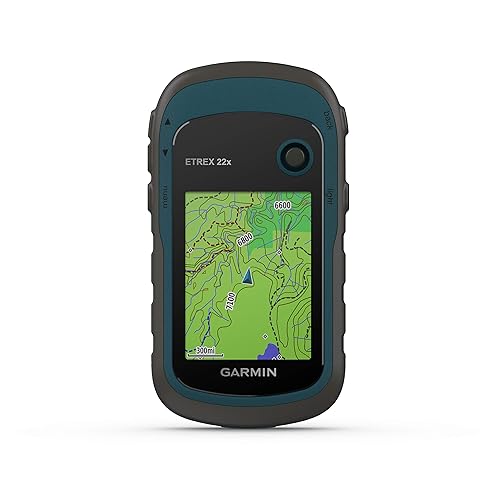 Best budget pickGarmin eTrex 22xView on Amazon
- 5
 Best for vehicle trackingHidden Tracki Pro GPS TrackerView on Amazon
- 6
 Best for trailside wildlife monitoringTACTACAM Reveal X 4.0View on Amazon
- 7
 Best for solar-powered camera monitoringTACTACAM Reveal Pro 4.0 SolarView on Amazon
Our Top Picks
Quick Comparison
| Product | Best for | Key feature |
|---|---|---|
| Garmin eTrex 32x | Dedicated off-road navigation with a backup handheld | Rugged handheld with multi-GNSS support and a large display |
| Garmin eTrex SE | Clear map reading in bright sunlight | Sunlight-readable screen with wireless connectivity |
| Garmin eTrex 22x | Entry-level trail navigation | Compact rugged handheld with a simple interface |
| Garmin eTrex Solar | Multi-day trips away from charging | Solar charging with a high-resolution screen and IPX7 water resistance |
| Hidden Tracki Pro GPS Tracker | Tracking a vehicle or trailer | Magnetic mount with 4G LTE real-time tracking |
| TACTACAM Reveal X 4.0 | Trailside cellular monitoring | Built-in GPS and Live View on cellular connection |
| TACTACAM Reveal Pro 4.0 Solar | Remote, solar-powered camera placement | Solar power with night vision and built-in GPS |
Garmin eTrex 32x
Garmin eTrex 32x, Rugged Handheld GPS Navigator
Best for: Dedicated off-road navigation with a backup handheld For a deeper look, 7 Best Chain Lubes for MTB: 7 Top Picks for Dry, Wet and Mixed Trails (2026) covers this in detail.
This is a good fit for drivers who want a standalone navigator that keeps working when a phone loses signal, runs out of battery, or gets damaged on the trail. It suits people who plan routes in advance and load them before leaving pavement.
Key specs
- Rugged handheld construction typical of the eTrex line
- Multi-GNSS satellite support for faster position lock in canyons and forest cover
- Designed to run on AA batteries for field replacement
Pros
- Works fully offline without cellular coverage
- Familiar Garmin interface that many owners find intuitive
- Strong reputation for durability among trail users
Cons
- Map detail depends on the data you load, which can add setup time
- Smaller screen than a modern smartphone for reviewing terrain
Bottom line: The most balanced choice for drivers who want a dependable, all-weather navigator as their primary or backup device.
Garmin eTrex SE
Wireless Connectivity, Multi-GNSS Support, Sunlight Readable Screen Garmin eTrex® SE, GPS Handheld Navigator
Best for: Clear map reading in bright sunlight
Desert and high-altitude drivers often struggle with glare on consumer screens. This model is aimed at people who spend long hours in open terrain where screen readability matters as much as accuracy.
Key specs
- Sunlight-readable display
- Wireless connectivity for transferring routes and data
- Multi-GNSS support
Pros
- Display stays legible in strong sun, a common owner point of praise
- Wireless transfer simplifies route sharing
- Multi-GNSS improves lock in mixed terrain
Cons
- Basic mapping compared with larger color touchscreen units
- Learning the menus takes some time for new users
Bottom line: A strong pick for desert and open-country drivers who prioritize screen visibility over a large display.
Garmin eTrex 22x
Garmin 010-02256-00 eTrex 22x, Rugged Handheld GPS Navigator, Black/Navy
Best for: Entry-level trail navigation
New off-roaders who want a proven handheld without paying for extra features will find this model straightforward. It is also a practical second unit for a group where one or two people need a reliable backup.
Key specs
- Rugged handheld body
- Compact footprint for dash or pack mounting
- Battery-powered operation
Pros
- Simple controls suitable for beginners
- Compact size fits easily in a console
- Owners frequently cite dependable basic positioning
Cons
- Fewer advanced mapping and connectivity features than premium models
- Smaller screen limits detailed terrain review
Bottom line: Best for beginners and budget-minded drivers who need reliable position and simple routing.
Garmin eTrex Solar
Essential Navigation Features, Solar Charging, High Resolution Screen, Multi-Band GPS, Water Resistant (IPX7) Garmin eTrex® Solar, Rugged & Easy-to-Use GPS Handheld
Best for: Multi-day trips away from charging
Overlanders on extended routes, where wall power and vehicle charging may be unavailable for days, benefit most from solar charging. It is also a good choice for anyone who dislikes managing spare batteries.
Key specs
- Solar charging capability
- High-resolution screen
- IPX7 water resistance rating
- Multi-band GPS
Pros
- Solar charging reduces dependence on spare batteries
- IPX7 rating offers strong protection against water immersion
- Multi-band GPS supports accuracy in difficult conditions
Cons
- Solar charging is slower than mains or vehicle power, so cloudy trips may need a backup plan
- Premium positioning means a higher purchase cost than entry models
Bottom line: The right choice for long-distance overlanding where reliable off-grid power matters.
Hidden Tracki Pro GPS Tracker
Magnetic, Assets & Car Real-Time Tracking, Subscription Required, Cancel Anytime, Hidden Tracki Pro GPS Tracker for Vehicles, 4G LTE, Long Battery Life
Best for: Vehicle tracking
This is not a navigation device. It suits owners who want to know where a truck, trailer, or side-by-side is located when parked at a trailhead or moved by someone else. Note that the listing requires a subscription.
Key specs
- Magnetic mounting
- 4G LTE real-time tracking
- Long battery life for a portable tracker
Pros
- Magnetic mount allows quick placement and removal
- Real-time location updates via cellular network
- Useful for theft deterrence and fleet awareness
Cons
- Requires an active subscription and cellular coverage
- Does not provide trail routing or offline maps
Bottom line: A tracking tool, not a navigator. Pick it if vehicle location monitoring is your priority.
TACTACAM Reveal X 4.0
4K Photo & 1080p Video, Industry-Best Battery Life, Built-In GPS, Live View, LTE Game Cameras TACTACAM Reveal X 4.0 Cellular Trail Camera (2-Pack) + Microfiber Cloth
Best for: Trailside wildlife monitoring
Hunters and wildlife observers who want to check cameras at remote spots benefit from built-in GPS and cellular Live View. This is a camera rather than a navigator, and it is relevant here because some off-roaders use trail cameras to watch access roads and campsites.
Key specs
- 4K photo and 1080p video capture
- Built-in GPS
- Cellular Live View
Pros
- Live View allows remote checks without a site visit
- Built-in GPS helps record camera locations
- Includes a two-pack for broader coverage
Cons
- Cellular service and plan costs apply for remote viewing
- Not designed for vehicle or route navigation
Bottom line: Suited to trail monitoring and camp security, not turn-by-turn navigation.
TACTACAM Reveal Pro 4.0 Solar
Solar-powered 4K cellular game camera: night vision, motion-activated capture, Live View, built-in GPS & no-WiFi LTE TACTACAM Reveal Pro 4.0 Solar Cellular Trail Camera, 2 Pack – 4K No-Glow
Best for: Remote, solar-powered camera placement
When a camera must sit in an area without a power outlet, solar power keeps it running. It is most relevant to owners who maintain remote trail monitoring points.
Key specs
- Solar power option
- 4K capture with night vision
- Built-in GPS and LTE connectivity
Pros
- Solar operation reduces battery swaps at remote sites
- Night vision supports overnight monitoring
- Built-in GPS aids location logging
Cons
- Solar output depends on sun exposure and mounting angle
- Cellular viewing requires a service plan
Bottom line: A good match for remote, long-term camera placement where power access is limited.
Buying Guide
Navigation Features and Map Support
Check whether the unit supports the map formats you need, whether topographic detail is included, and whether you can load custom routes. Handhelds rely on loaded map data, so plan downloads before leaving signal.
Good picks for this: Garmin eTrex 32x, Garmin eTrex 22x
Satellite Support and Accuracy
Multi-GNSS and multi-band support improve position lock in canyons, under dense canopy, and along steep valley walls. Look for these terms in the specification sheet.
Good picks for this: Garmin eTrex SE, Garmin eTrex Solar
Screen Visibility
Desert and snow glare can make small screens hard to read. Sunlight-readable displays and adjustable backlighting matter for daytime navigation.
Good picks for this: Garmin eTrex SE, Garmin eTrex Solar
Battery and Power Options
Battery type and runtime determine how long a unit works between charges. AA-powered units can be swapped in the field, while solar and rechargeable options reduce replacement needs. Carry spare power for multi-day trips.
Good picks for this: Garmin eTrex Solar, Garmin eTrex 32x
Durability and Water Resistance
Check the IP rating and build description. An IPX7 rating indicates protection against temporary immersion. Rugged housings matter on rocky trails and in rain-soaked terrain.
Good picks for this: Garmin eTrex Solar, Garmin eTrex 22x
Connectivity and Tracking Needs
Decide whether you need offline navigation, live tracking, or remote camera viewing. Tracking devices and cellular cameras often depend on subscriptions and coverage, which must be factored into your plan.
Good picks for this: Hidden Tracki Pro GPS Tracker, TACTACAM Reveal X 4.0
Mounting and Use Case
Consider whether the device will live on the dash, in a pack, or on a handlebar. Compact handhelds suit flexible mounting, while magnetic trackers suit concealed placement on a vehicle or trailer.
Good picks for this: Garmin eTrex 22x, Hidden Tracki Pro GPS Tracker
FAQ
Do I need a dedicated GPS if I already have a smartphone?
Not always, but a dedicated handheld keeps working when your phone battery drains, the screen cracks, or the signal disappears. Many off-roaders carry both, using the phone for detailed planning and the handheld for reliable backup.
What is the difference between a handheld GPS and a vehicle tracker?
A handheld navigator shows your position on loaded maps and helps you follow routes. A vehicle tracker reports where a vehicle is located, usually through cellular service, and does not provide trail navigation.
Do off-road GPS units need a subscription?
Standalone handhelds generally work without a monthly fee once maps are loaded. Cellular trackers and remote-view cameras often require an active service plan. Check the listing details before buying.
How important is multi-band or multi-GNSS support?
It can improve accuracy and lock speed in difficult terrain such as deep canyons and heavy forest cover. For open desert driving, the difference may be less noticeable.
Can a GPS replace trail guidebooks and paper maps?
It should not. Batteries fail and electronics get damaged. Carry paper maps as a fallback and confirm closures and access rules with the land-managing agency before you go.
How should I prepare a GPS before a trip?
Load maps and routes at home, check battery condition, carry spare power, and test navigation in the driveway. Save waypoints for water, fuel, and camp locations.
Is a solar GPS practical for overlanding?
It can be, especially on extended trips where charging is limited. Solar charging depends on sun exposure, so pair it with a backup battery or vehicle charging option for cloudy stretches.
Conclusion
For most drivers looking for the best GPS for 4×4 trails, a rugged Garmin handheld is the most reliable starting point. The eTrex 32x suits drivers who want a full-featured backup navigator, the eTrex SE fits bright open terrain, and the eTrex 22x works well for beginners on a tighter budget. The eTrex Solar makes sense for long, off-grid overland trips. If your priority is tracking a vehicle rather than navigating, the Hidden Tracki Pro is the better tool, and the TACTACAM cameras serve those who want remote trailside monitoring. Match the device to your use case, carry paper maps as a backup, and check local access rules before heading out.
Sources
- Background on GPS accuracy, satellite systems and how position data is used in mapping (usgs.gov)
- Forest Service guidance on travel management, road and trail access, and map use on national forest land (fs.usda.gov)
- Bureau of Land Management information on off-highway vehicle routes, rules and land access (blm.gov)
Related reading
- Wharton State Forest 4×4 Trails: 7 Best Maps and Guides for 2026
- Top 9 Joshua Tree 4×4 Trails: Expert Picks Compared (2026)
- Top 6 Guide to Northern California Backroads and 4×4 Trails Compared
About Caleb Morgan
Caleb Morgan is part of our editorial team and reviews and edits our off-road trails & overlanding guides, checking product details against manufacturer specifications and owner feedback.