By Audrey Hayes
Updated November 2026
Water storage for overlanding is one of those gear decisions that looks simple until you are three days into a remote loop with a dry camp ahead. The right container depends on how much water you actually need, how your vehicle has room to carry it, whether it has to sit in the sun all day, and how you plan to get water out of it at the campsite. This guide compares seven widely sold containers across those criteria. We looked at manufacturer specifications, brand reputation for materials and leak resistance, and the patterns owners tend to report about spigots, handles, mounting and long-term durability. We have not run these containers through field tests of our own, so treat the notes below as a research summary rather than hands-on results.
Our top picks at a glance
- 1
 TOP CHOICEBest overall5 Gallon Water Jug, Camping Water Container, BPA Free Portable Water Dispenser with SpigotView on Amazon
- 2
 TOP CHOICEBest for stackable storage5-Gallon Stackable Water Storage Containers, Emergency Water Storage fView on Amazon
- 3
 TOP CHOICEBest for vehicle mounting8 Gallon 30L Storage Container with Lockable BracketView on Amazon
- 4
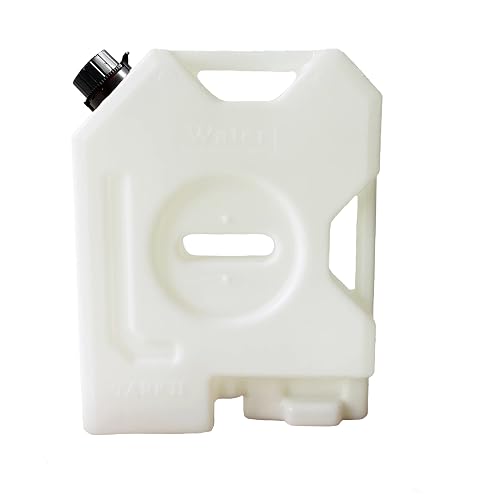 Best budget pickLightweight Durable water can with carry handle, 2-Gallon Portable Water TankView on Amazon
- 5
 Best for group camp waterWater Storage Container for Camping, 6.6 Gallon Water Tank with FaucetView on Amazon
- 6
 Best for easy transportGIGYES Rolling Wheel Water Storage Tank for Hiking Camping, Portable 7View on Amazon
- 7
 Best for dual dispensingUPWOIGH 3.5 Gallon Water Jug with Spigot and Rechargeable Pump, Olive GreenView on Amazon
Our Top Picks
Quick Comparison
| Product | Best for | Key feature |
|---|---|---|
| 5 Gallon Water Jug, Camping Water Container | Overall day-to-day trail use | BPA-free body with built-in spigot |
| 5-Gallon Stackable Water Storage Containers | Stacking in a cargo area | Stackable design, 20-gallon total capacity |
| 8 Gallon 30L Storage Container with Lockable Bracket | Securing water to a rack or bed | Lockable bracket for vehicle mounting |
| 2-Gallon Portable Water Tank | Small loads and tight budgets | Light weight with carry handle |
| 6.6 Gallon Water Tank with Faucet | Shared camp water supply | Larger capacity with faucet |
| GIGYES Rolling Wheel Water Storage Tank | Moving water across camp or lot | Wheels and folding handle |
| UPWOIGH 3.5 Gallon Water Jug | Pour-free dispensing at camp | Spigot plus rechargeable pump |
5 Gallon Water Jug, Camping Water Container, BPA Free Portable Water Dispenser with Spigot
5 Gallon Water Jug, Camping Water Container, BPA Free Portable Water Dispenser with Spigot, Leak-Proof Large Camping Water Jug for Emergency Storage,Outdoor,Hiking
Best for: Overall day-to-day trail use
This is a practical middle-size option for overlanders who want one container that handles camp cooking, washing and drinking water without becoming a burden to lift. Its five-gallon capacity fits most mid-size vehicle footwells and cargo corners.
Key specs
- Capacity: 5 gallons (about 19 liters)
- Material: BPA-free plastic body
- Outlet: built-in spigot for pour-free dispensing
- Design: marketed as leak-proof
Pros
- Spigot makes filling cups and pots simple at camp
- Manageable weight when full compared with larger tanks
- Good fit for a single person or a two-person camp
Cons
- Not designed for permanent mounting on a rack
- Limited capacity for longer dry stretches
Bottom line: A strong default choice for overlanders who want versatility without committing to a large fixed tank.
5-Gallon Stackable Water Storage Containers, Emergency Water Storage for Camping and Disaster Preparedness, 20 Gallons
5-Gallon Stackable Water Storage Containers, Emergency Water Storage for Camping and Disaster Preparedness, 20 Gallons
Best for: Stacking in a cargo area
Owners who carry a larger total supply in a truck bed or SUV cargo area often prefer several smaller stackable units over a single large tank, since the load can be split and reduced as water is used.
Key specs
- Capacity: 5 gallons per unit, listed as 20 gallons total
- Stackable design for organized cargo storage
- Marketed for camping and emergency use
Pros
- Splits total water into manageable units
- Stacks to use vertical space in cargo areas
- Useful for both trail and emergency preparedness
Cons
- Multiple containers mean more caps and seals to check
- Stacked loads need strapping to stay put on rough roads
Bottom line: Best for overlanders who want modular capacity and an organized cargo layout.
8 Gallon 30L Storage Container with Lockable Bracket
8 Gallon 30L Storage Container with Lockable Bracket
Best for: Securing water to a rack or bed
This type of container suits overlanders who want water mounted externally, freeing interior space. The lockable bracket is the main reason to consider it over a loose jug.
Key specs
- Capacity: 8 gallons (30 liters)
- Lockable bracket for mounting
Pros
- Bracket keeps the container from sliding on rough tracks
- Frees interior cargo space
- Larger capacity than most jugs in this comparison
Cons
- Full weight adds load to roof racks or bed mounts that must be rated for it
- Mounting hardware needs to be checked against your rack’s weight limit
Bottom line: A good pick for builds with a sturdy rack that can carry the full weight of a filled tank.
Lightweight Durable water can with carry handle, 2-Gallon Portable Water Tank
Lightweight Durable water can with carry handle. Ideal for Trucks, SUV, RV, UTV, Off-Road vehicles and emergency outdoor use. 2-Gallon Portable Water Tank,White Storage Canister,1 Pack
Best for: Small loads and tight budgets
Solo travelers, weekend overlanders and anyone topping off a secondary supply will find a two-gallon can easy to lift and store. It is also a useful backup for drinking or cooking water.
Key specs
- Capacity: 2 gallons
- Carry handle for one-hand transport
- Listing notes suitability for trucks, SUVs, RVs and UTVs
Pros
- Light enough to carry in one hand when full
- Fits in small gaps and door pockets
- Low-cost way to add a backup supply
Cons
- Low total capacity for multi-day dry camps
- Smaller openings can make filling slower
Bottom line: Ideal as a backup or solo supply rather than a main water source for a group.
Water Storage Container for Camping, 6.6 Gallon Water Tank with Faucet, Portable First Aid Water Storage
Water Storage Container for Camping, 6.6 Gallon Water Tank with Faucet, Portable First Aid Water Storage for Outdoor Hiking, RV, Autonomous Driving Tour, 17.7 x 11.8 x 11.8in
Best for: Shared camp water supply
Couples or small groups who set up a fixed camp and draw water several times a day benefit from a faucet tank that avoids repeated pouring and lifting.
Key specs
- Capacity: 6.6 gallons
- Faucet outlet
- Dimensions: 17.7 x 11.8 x 11.8 in
Pros
- Faucet suits shared camp use
- Good capacity for a two- to three-day supply
- Listing mentions RV and outdoor use
Cons
- Heavier when full, so it is best placed on the ground at camp
- Faucet seals should be checked before each trip
Bottom line: A solid camp-side tank for overlanders who stay put for a few nights.
GIGYES Rolling Wheel Water Storage Tank for Hiking Camping, Portable 7.4 Gallon Water Jug with Wheels and Folding Handle
GIGYES Rolling Wheel Water Storage Tank for Hiking Camping, Portable 7.4 Gallon Water Jug with Wheels & Folding Handle
Best for: Moving water across camp or lot
When a full tank has to travel over gravel, sand or a long campsite path, wheels and a folding handle reduce strain considerably.
Key specs
- Capacity: 7.4 gallons
- Rolling wheels and folding handle
Pros
- Wheels make moving a full load much easier
- Folding handle saves space when stowed
- Good capacity for group use
Cons
- Wheels can struggle on deep sand or loose rock
- Takes up more floor space than a jug
Bottom line: Well suited to group camps on firm ground where the tank needs to be relocated.
UPWOIGH 3.5 Gallon Water Jug with Spigot and Rechargeable Pump, Olive Green
Camping & Emergency Water Storage, Two Dispensing Options, Non-Electric Tap, BPA-Free HDPE, Dual Openings UPWOIGH 3.5 Gallon Water Jug with Spigot & Rechargeable Pump, Olive Green
Best for: Pour-free dispensing at camp
Overlanders who want to fill a basin or pot without tipping the container will appreciate a container offering both a gravity spigot and a pump option.
Key specs
- Capacity: 3.5 gallons
- Two dispensing options: non-electric tap and rechargeable pump
- Listing describes BPA-free HDPE construction
Pros
- Two outlet options cover different camp situations
- Compact size fits smaller vehicles
- Olive green finish suits a low-profile camp look
Cons
- Pump depends on a battery and needs charging before trips
- Smaller capacity than most others here
Bottom line: A good fit for solo or two-person trips where easy dispensing matters more than total volume.
Buying Guide
Capacity and Days Between Refills
Plan on a minimum of about one gallon per person per day for drinking and basic cooking, and more if you also wash or run a hot-water system. Multiply that by your planned days without a refill point, then add a reserve for delays. Many overlanders carry at least three to five days of supply for remote routes.
Good picks for this: 5 Gallon Water Jug, Camping Water Container; 6.6 Gallon Water Tank with Faucet
Mounting Method and Vehicle Load Limits
Filled containers are heavy. A five-gallon container weighs roughly 42 pounds when full, and larger tanks add considerably more. Check your roof rack, bed rail or bumper-mounted carrier’s rated capacity before mounting, and keep the load low and centered where possible.
Good picks for this: 8 Gallon 30L Storage Container with Lockable Bracket; 5-Gallon Stackable Water Storage Containers
Material and Taste Safety
Look for food-grade plastics such as HDPE and labels stating BPA-free construction. Avoid containers that previously held non-food chemicals, and do not use a container for fuel or fluids other than water. Reserve some containers for drinking water only.
Good picks for this: 5 Gallon Water Jug, Camping Water Container; UPWOIGH 3.5 Gallon Water Jug
Dispensing Method
A spigot prevents spills and lets you fill cups or pots at waist height. A pump reduces effort but needs power. Gravity-only taps are simpler and more reliable in dusty conditions. Consider which method suits your camp routine.
Good picks for this: UPWOIGH 3.5 Gallon Water Jug; Water Storage Container for Camping, 6.6 Gallon Water Tank with Faucet
Weight and Portability
Measure both the empty weight and the full weight. A container you can lift safely at camp is more useful than a bigger one you avoid filling. Wheels help on firm ground but can bog down on sand, so match the design to your terrain.
Good picks for this: GIGYES Rolling Wheel Water Storage Tank; Lightweight Durable water can with carry handle
Durability and UV Exposure
Sun exposure degrades plastic over time and can warm water to uncomfortable temperatures. Store containers in shade when possible, inspect seals and caps before each trip, and replace any container with cracks or brittle sections. Keep the container out of direct contact with hot exhaust components.
Good picks for this: 8 Gallon 30L Storage Container with Lockable Bracket; 5-Gallon Stackable Water Storage Containers
Cleaning and Water Quality
Rinse containers before first use and periodically between trips. Use a mild, unscented cleaning solution and rinse thoroughly. Treat water from unknown sources before drinking, and follow local guidance on filtration or purification. For health-specific questions about water safety, consult a qualified professional or local health authority.
Good picks for this: 5 Gallon Water Jug, Camping Water Container; Lightweight Durable water can with carry handle
FAQ
How much water should I carry for an overlanding trip?
A common planning figure is about one gallon per person per day for drinking and cooking, with extra for washing, pets and any vehicle or cooling needs. Add a reserve of at least one extra day in case of delays or closed water points.
Should I mount my water container on the roof or inside the vehicle?
Interior storage keeps weight lower and protects containers from sun and debris, but it uses cargo space. External mounting frees room inside. Check your rack’s rated load and secure the container so it cannot shift on rough roads.
Can I use a water jug for fuel or other liquids?
No. Containers used for drinking water should be dedicated to that purpose. Fuel, oil and other chemicals can contaminate the plastic and make the water unsafe.
How do I keep stored water from going bad?
Store containers in a cool, shaded spot, keep them sealed, and empty and rinse them periodically. Replace water on a regular schedule rather than letting it sit for long periods, and inspect containers for odor or cloudiness before use.
Is a spigot better than a pump for camp use?
A spigot is simple and needs no power, making it reliable in remote settings. A pump is easier on your hands but depends on a charged battery. Many overlanders prefer a spigot as the primary method and keep a pump as an option.
What is the best size for solo overlanding?
For one person on a short trip, a two- to five-gallon container is usually enough, supplemented by a backup supply. Larger tanks make more sense for couples or groups with fixed camp routines.
How heavy is a full five-gallon water container?
Water weighs about 8.3 pounds per gallon, so a full five-gallon container weighs roughly 42 pounds before counting the container itself. Plan your vehicle load and mounting accordingly.
Conclusion
There is no single best container for every overlanding setup. A five-gallon spigot jug is a flexible default for most people. Stackable units suit organized cargo areas, a lockable bracket model suits rack-mounted builds, and a two-gallon can works well as a backup or solo supply. Larger faucet tanks fit fixed camps, rolling tanks help on firm ground, and a dual-dispensing jug covers pour-free camp use. Start with your daily water need, your mounting options and your typical days between refills, then choose the container that matches.
Sources
- Guidance on safe drinking water, storage and emergency preparedness (cdc.gov)
- Information on drinking water standards and household water treatment (epa.gov)
- Food-contact materials and guidance on food-grade plastics (fda.gov)
Related reading
- Water Tank for Overlanding: 6 Best Picks Compared for Trail Use
- Overlanding Water Filtration System: 6 Best Picks Compared for Trail Use
- Best Overlanding Storage Boxes: 6 Options Compared for Trail Camping (2026)
- 7 Best Overlanding Hot Water Heaters for Trail Camping (2026)
- Toyota 4Runner for Overlanding: 7 Steps to a Trail-Ready Build (2026)
About Audrey Hayes
Audrey Hayes is part of our editorial team and reviews and edits our off-road trails & overlanding guides, checking product details against manufacturer specifications and owner feedback.